START / ATTEMPT (@SafeToFail)
September–October 2026
Two communities, sales letters to about 100 newly registered California businesses, and an automated account on X. Shut down October 31, 2026.
I spent September and October 2026 on an experiment called SafeToFail. I wanted a small community for people who hadn’t made much yet, and who were willing to try something in the real world. I shut it down on October 31, 2026.
Two communities on Skool, a round of direct mail, and an automated account on X. The communities are being deleted, so I’m not linking to them. The screenshots are the record.
What I tried
START
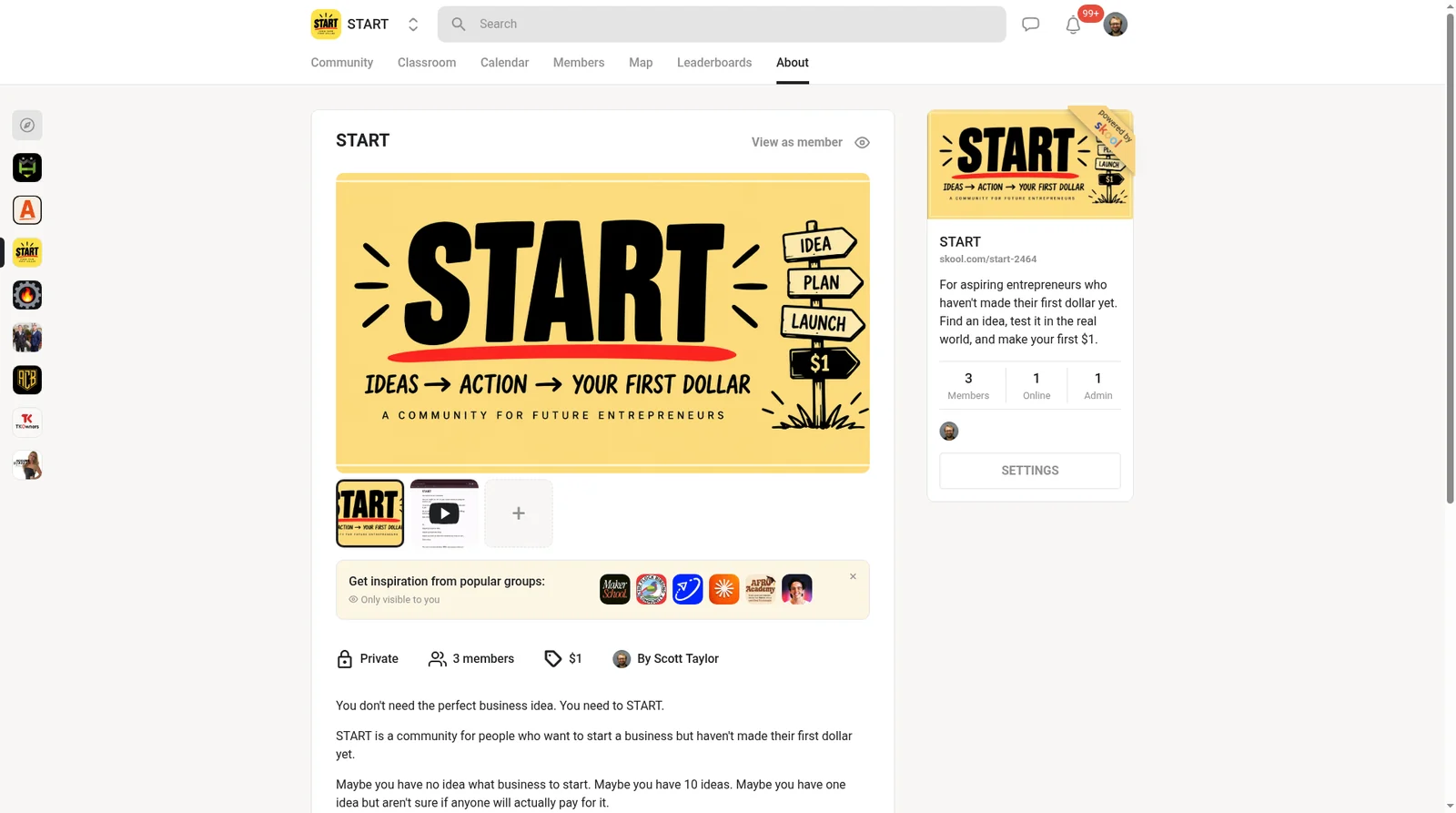
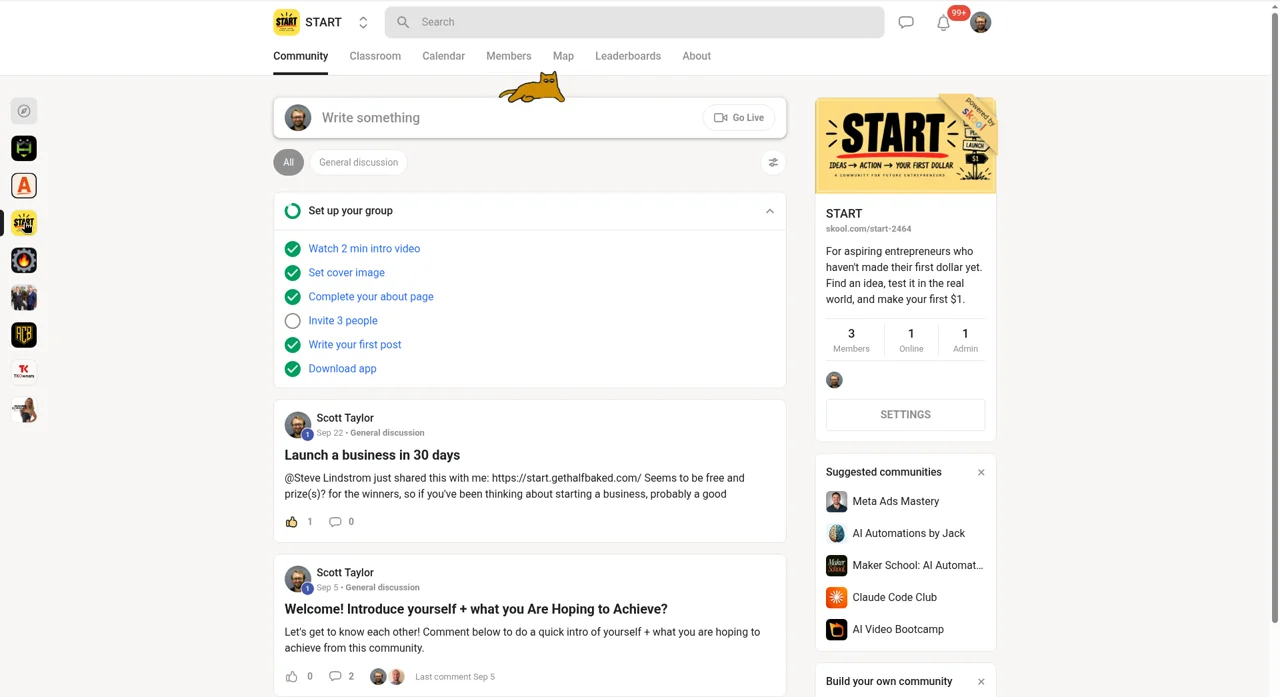
START was for aspiring entrepreneurs who hadn’t made their first dollar yet. Find an idea, test it in the real world, and make your first $1. I priced it at $1.
It ended with three members, including me.
 View full size
 View full size
ATTEMPT
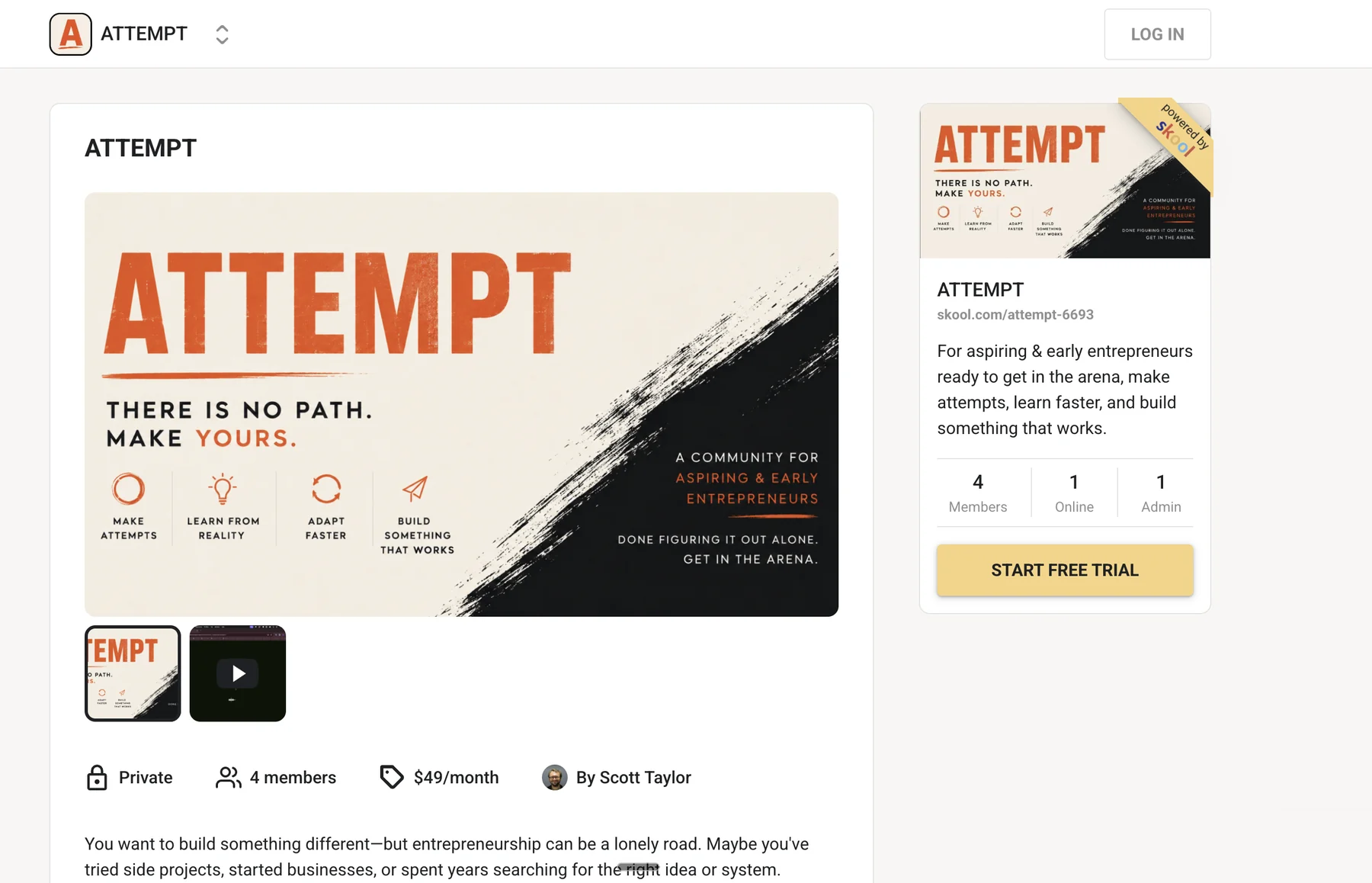
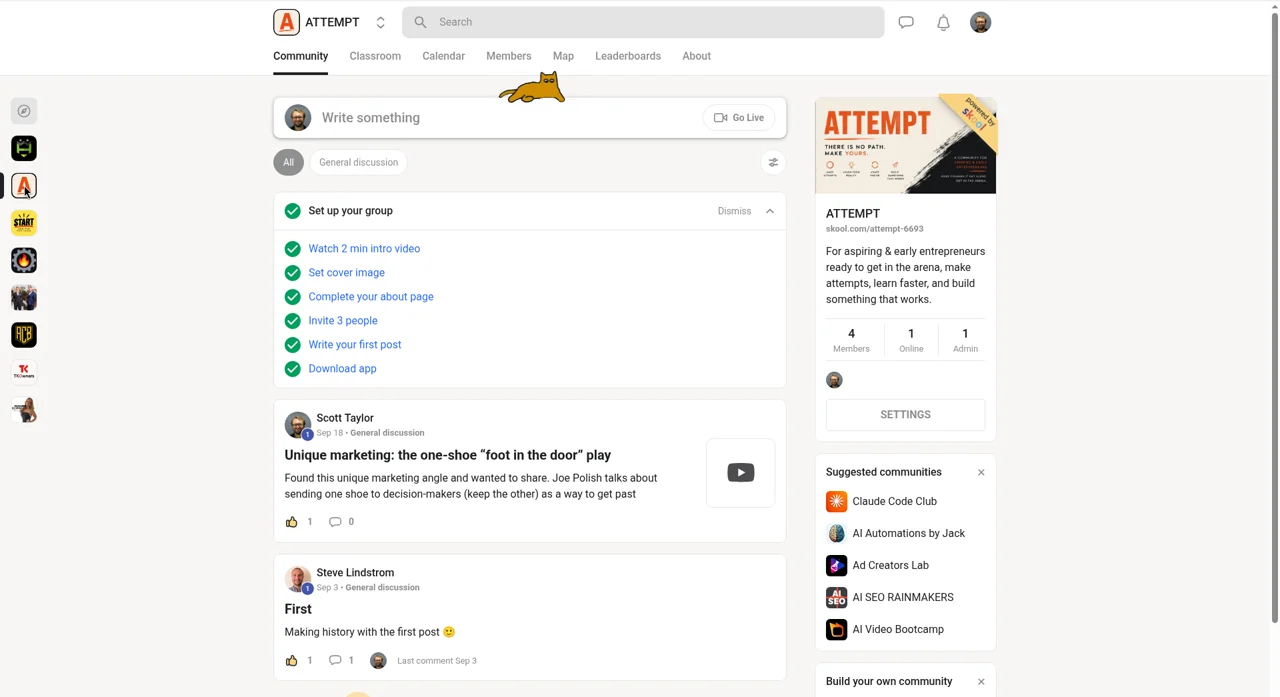
ATTEMPT was the next step: for aspiring and early entrepreneurs ready to get in the arena, make attempts, learn faster, and build something that works. I priced it at $49 a month.
It ended with four members, including me. Nobody outside that group paid to join.
 View full size
 View full size
Direct mail
The first attempt at getting users was direct mail. I sent sales letters to about 100 businesses newly registered in California. The state publishes a list of new registrations, and I mailed that list.
No responses I could track. Tracking was weak, so I can’t be sure a reply never came back some other way. I can say that nobody joined the paid community.
Finding people on Skool
Another thing I tried when starting ATTEMPT was finding people in Skool communities. I found a bunch of people stuck in 9-to-5s who were pretty sick of it.
Even though I was only charging $1, as a filter for people who were serious, the negativity was extreme. They really didn’t believe anything could work.
It solidified for me how much starting is a mindset issue. Most people don’t fail to start because they can’t find a good business. They have a kind of corrupted mindset. I don’t know if it’s from the media, school, or something else, but it was honestly disheartening.
@SafeToFail on X
I created @SafeToFail on September 12, 2026. On September 21 I started automated posting through Buffer. An AI assistant, Grok Bot, wrote the posts — about three a day. On October 15 I added automated replies to other people’s posts.
The account published about 259 posts.
Replying was the one thing that showed signs of working. Some of those replies got views, and a couple of people replied back. Around October 24, X put a temporary label on the account and limited its reach. After that, posts got 0–2 views each.
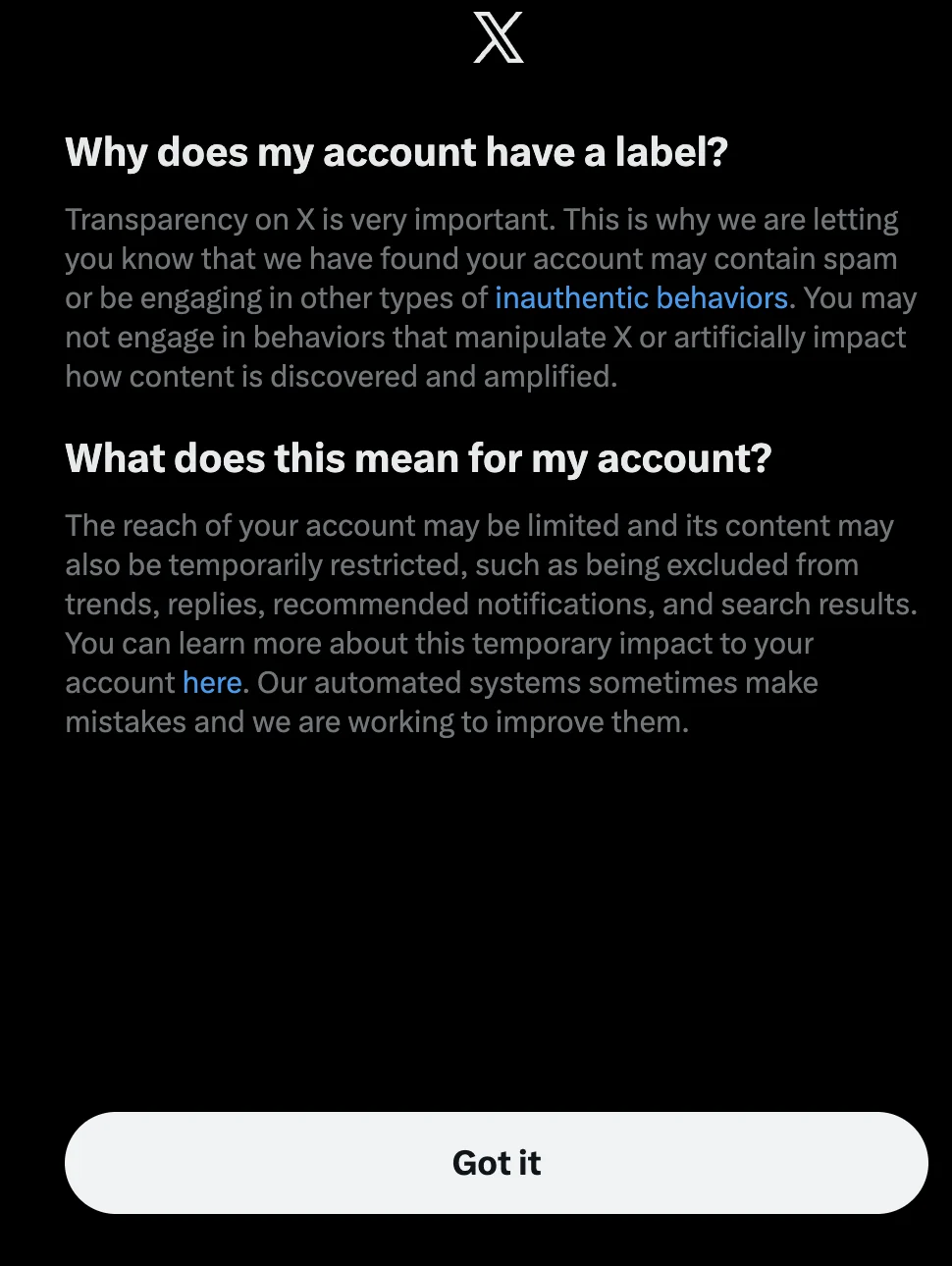 View full size
Followers peaked at 6 and ended at 4. Only one or two of them were people I didn’t already know.
In the last week I measured, 27 posts got 85 views and 0 likes.
I deactivated the account on October 31, 2026.
Why I shut it down
On October 31, 2026 I closed both communities and deactivated @SafeToFail. START never grew past the three of us. ATTEMPT never got a paid signup from someone who wasn’t already in the room. After the label, @SafeToFail wasn’t reaching anyone. I didn’t want to keep the rooms open and call that a community.
I’m grateful to the people who joined. The miss was mine: the offer, and how I tried to find people for it.
Why it failed
The mailing list wasn’t a great list for this. Most of those new registrations were local service businesses — cleaning companies, and businesses like them.
I’ve spent time in a cleaning-business group. A lot of the owners there don’t think of themselves as entrepreneurs, and they feel disconnected from the SaaS and startup founders who tend to gather in a community like the one I was building. In Robert Kiyosaki’s terms, many of them are in the S quadrant, self-employed, rather than the B quadrant, business owner. They’re great at hustling. That energy goes into creating their own job, not into building systems that run without them. They weren’t looking to pay for entrepreneurship mentorship, or for a community built around that.
That’s a mismatch between my offer and what they wanted. It isn’t a judgment of them. The work they do is real.
A few other things I want to remember:
- Automated posting, on its own, doesn’t build an audience. The posts went out. Almost no one had a reason to know who they were from.
- Platforms throttle activity that looks automated. The label said reach could be limited, and after it appeared, posts got 0–2 views each.
- If I mail letters again, I’ll track them. A unique URL or a code on each one, so “no response” means no response, not “I couldn’t see a response.”